by tresoc | Sep 25, 2017 | News
A collection of oral histories was gathered over the summer of 2017 by Tresoc intern, Lawrie Swinnen-Styles. Here are two personal accounts from two local families: the Amhersts who currently live in the old mill house and where the proposed new archimedes turbines will be located; plus local businessman Richard O’Connell, whose family have lived in the area for a few generations, right back to when the original leat and turbine were constructed by the Elmhirsts. It’s a fascinating snapshot into the past, that we are delighted and priviledged to record.
The Amherst Family.
What do you know about the original building of the turbines in 1929?
Well, it was quite a complex process, because they had to add a length to the millhouse in order to house the turbines. We’ve converted the turbine house into a sort of hall, and you can still see bits of I-beam jutting out of the walls where they used to have hoists. From the outside of the building, you can also see some original archway stones which have now been blocked up.
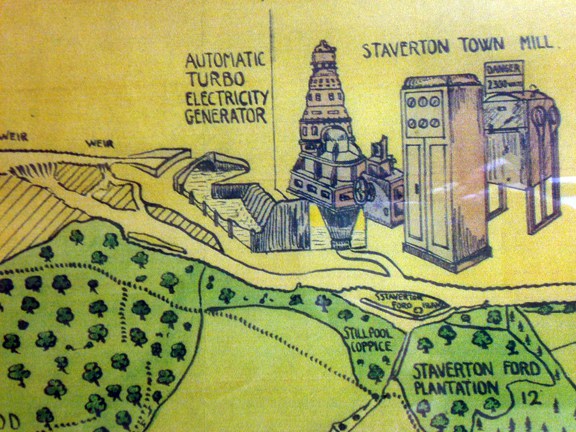
When the Elmhirsts renovated Dartington Hall, they rented Staverton Bridge Mill to house their workforce, and similarly hired this building to house the turbines, and the hydro project was built not very long after the Elmhirsts started on the Hall.
I never heard why it was they closed the turbines down, but I can only assume it was too expensive to recondition it. I don’t think they even explored renewing it when it was due for closure. The Elmhirsts had leased rather than bought the Staverton Bridge Mill and this building from the Church commissioners, and all they had to do was wind up the leases, and the Church commissioners sold them. The Dartington Trustees weren’t involved in the sale at all.
So when did the turbine stop?
Around 1970. There’s a plaque outside the wheelhouse that gives the dates, 1929-1970
And when did you move into the house?
- I’d worked at Dartington- we were on the estate there for 13 years before we came here. All the time we’d lived there, we never actually found this place. I think we might have known of it, but we didn’t have occasion to come to Staverton often.
Do you know who lived here beforehand?
This was the miller’s house- quite a modest house, and the chap who lived here at the time was an employee of Dartington. He used to work for the estate stores, and drive the estate lorry, and he had a wife and children, and he kept an eye on the hydro. Norman Caunter. We used to meet him at the Dartington Estate Christmas dinner. Very nice man, clearly very sad to move out.
Was the turbine still installed when you moved in, even though it wasn’t running?
Not when we actually got here. They’d been here a week or two before the house auction and taken all the stuff out. But there was still a lot of evidence of it. The hall from where the turbine was originally operated was covered in manhole covers. The turbines were lowered through the floor of that room, and we now have a clear cover where one of the manhole covers used to be, so you can see down into the leat.
What was the condition of the leat when you moved in?
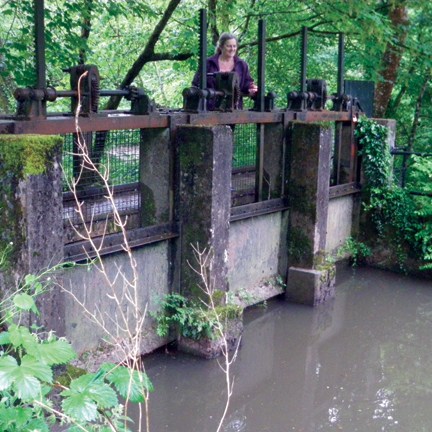
There was nothing growing in it, and there was a modest flow coming through, which was very attractive. It was like two little streams; no weeds or anything. We had our four children living with us then, and they loved it. We had a little plastic boat, and they could row that up the leat to the sluice gates. We had boards made by a local sawmill, and put them in the slots under the house in order to raise the depth to about four feet.
Do you know who has had control of the sluice gate over the time that you’ve been living here?
Well when we first came, there was a thing called the River Authority, and there were two gentlemen who were responsible for the maintenance- keeping an eye on the whole of the River Dart, source to sea. They visited us after we’d been here a week or two, and they were very experienced men. One of them was very keen on fishing, and he seemed quite keen to set up something to develop the salmon population, though nothing really came of that. They used to come every couple of months I suppose, and we had inherited the handle that worked the sluice gates. So they came and borrowed that and would give the leat a flush every now and again; open the gates wide for two or three hours, and then they’d come back and shut them again. They were two really lovely chaps.
And then the River Authority was closed down, and their responsibility was passed to the Environment Agency, and from that moment, we didn’t really see anybody. When one of the uprights at the sluice was broken off – about a foot of it- the length of pipe that had broken off sat on the grass for many months, perhaps a couple of years. The Environment Agency would occasionally send someone to cast a brief eye over things, but they didn’t really take any interest or do anything at all.
So that went on for about 15 years. Then, around 1990, the Environment Agency appointed a new head of rivers and water. After he’d been appointed a year or so, he came and said “there’s so much water coming down here, it’s affecting the fishing, and I’m going to cut it down,” and he spent many hundreds of pounds building apparatus to control the flow and stop our use of the handle. Within a few days of cutting the- already tiny- flow of water in the leat, there were weeds beginning to grow throughout the entire length of the leat. Within weeks it was full of weeds, and within months it was like it is now, feet high. And the amount of water that they saved must have been negligible.
What about flooding in the leat?
Well we have had floods several feet high, up to the railway line. Not often, but enough to worry about. There was one occasion when there was a flood brewing, and the water level in the leat was so low- negligible- that when the flood built up, it came out over the river bank, and a wave 2 feet high came pouring across the garden and took down an 8 foot length of leat wall, which was the original mill wall from a couple of hundred years ago. I saw it happen. It was 11am, and I went out because I thought there was likely to be a flood, and this huge wave just crashed over the garden and poured into the empty leat. If the leat had had reasonable flow in it, not only might the flood have been relieved somewhat, but the overpouring of the water wouldn’t have destroyed the wall.
How frequently does flooding happen?
Well it depends on your definition I suppose, but for flooding bad enough to rise over the river banks and flow onto our tarmac, I would say between one and three times a year.
It’s been in the house three or four times since we’ve lived here. The worst occasion flooded the house 18 inches deep.
During one of the floods, two local young men came down the river in a canoe. What’s the story behind that?
That was during the worst flood, in the 70’s, and our youngest daughter was then about 12. Ann’s mother and brother managed to get to the main house from the small apartment where her mother lived, but our daughter made it out of the small top window of the apartment, and onto a passing canoe, rowed by two local young men. There was probably a less exciting way to get her out of the apartment, but then again the overflowing river was moving at quite a considerable speed.
There was a farmer’s horse living in our field at the time of the flood, and we thought the horse would have panicked and drowned, because nobody managed to rescue it. But the next morning, there was the horse, walking safely on the railway line. It must have made its way up to safety during the night.
Just outside our house, there’s a 10 foot farm gate to the field, and that came off its hinges during the flood, and was found in Littlehempston, three or four miles down the railway, when the flood subsided.
Did you ever have any warning of floods beforehand?
There used to be a flood warning by telephone, though we weren’t warned very far in advance. I think the Environment Agency has improved its flood warnings since then.
When did you build the wall at the bottom of the leat?
Around 20 years ago. My idea was the if we had a wall across there around 7 foot high with a small escape for the water, the water level would rise to almost the level of the adjoining land, and in the summer it would make a wonderful swimming pool. But it didn’t work because the head of water at the Environment Agency at the time insisted on some questionable things. For instance, having a fish ladder up to that wall so that any odd fish that wanted to come up the leat could get over it. The fact that they would then get stuck in the sluice was something that she did not seem to consider. At one time the water was just deep enough to swim up the leat, but eventually our plans for a pool were thwarted.
That wall is only made out of sandbags really, so it will be very little work to knock down.
And finally, how do you feel about the plans of Tresoc to renew the leat and rebuild a turbine?
I’m delighted. It was a very long time ago that the original turbine was built, and it’s good to think the whole idea will be brought back. We’re very happy to feel the leat is actually going to be used again. I have every faith that if Tresoc and Fishtek say it’s possible and financially viable, it will get built.
Richard O’Connell
My father was John O’Connell, born on the 24th June 1900 in Limerick, Ireland. He landed at Liverpool in 1920 to escape what was becoming a rather ‘confused’ political situation in Ireland. He worked then in the construction industry until the mid 1920’s when there was a recession, when he took a job working on a farm in Sheffield. When the recession ended he started working for a civil engineering company in Sheffield and was sent to Paignton to work on the gasometer site which was being built on the seafront between Torquay and Paignton. He then moved on to Staverton Leat where they camped in the fields. There used to be regular winter floods which came up and washed the camp away together with the wooden casting forms for the concrete. They had to go to Totnes to recover them from the river. According to my mother, there were a couple of brothers called McCarthy in the construction gang who were constant trouble makers and tried to discredit my father to her. One day when she walked out of the house my father had one of the McCarthys by the neck and was holding him over the leat bridge.
My gran was Mrs Napper, who the train crossing is named after. It was her job to open and close the level crossing gates. When the area was flooded she had to use two chairs to get across and back from the gates. The bottom half of the house had been abandoned many years before she moved there because of the constant flooding. My mother used to catch eels in the leat using a nylon stocking with some chicken offal inside. My mother (Ethel Napper) married my father (John O’Connell) on the 19th June 1937 at Totnes Catholic church. After they married they lived at number 7 Broompark where he worked as a carpenter for Dartington Hall. In 1949 they left Broompark and bought a small farm near Aveton Gifford.
Pictured: Photo 1: John and Ethel O’Connell, 1937. Photo 2: Ethel Napper on a horse at the railway crossing, 1933.


Thank you, to both the Amhersts and Richard O’Connell for providing their time and fascinating accounts.
by tresoc | Sep 21, 2017 | Events, Latest TRESOC News
The Second Annual Archimedes Screw Fest at Totnes Weir on the River Dart on Saturday October 7th, 11am – 4pm. Free
Turbine tours by Alastair Gets of TRESOC at 12 noon & 3pm
• Meet Archimedes!
• River science all day with Westcountry Rivers Trust – bring the grandkids
• Sign up to become a Riverkeeper – a steward of the River Dart
• Delicious veg-filled arancini to eat, from The Kitchen Table
The Screw Fest is back!
• If you missed the tours last year, join us on the 7th and see your investment at work producing clean electricity for KEVICC & the foundry.
• If you came on a tour last year, please suggest to a friend that they come along this year.
You are part of a success story:
• The turbines have been cranking since they began generating electricity in December 2015. The plant has been performing ahead of expectations.
• The recreational area created near the turbine house was very popular over the summer – local people love it!
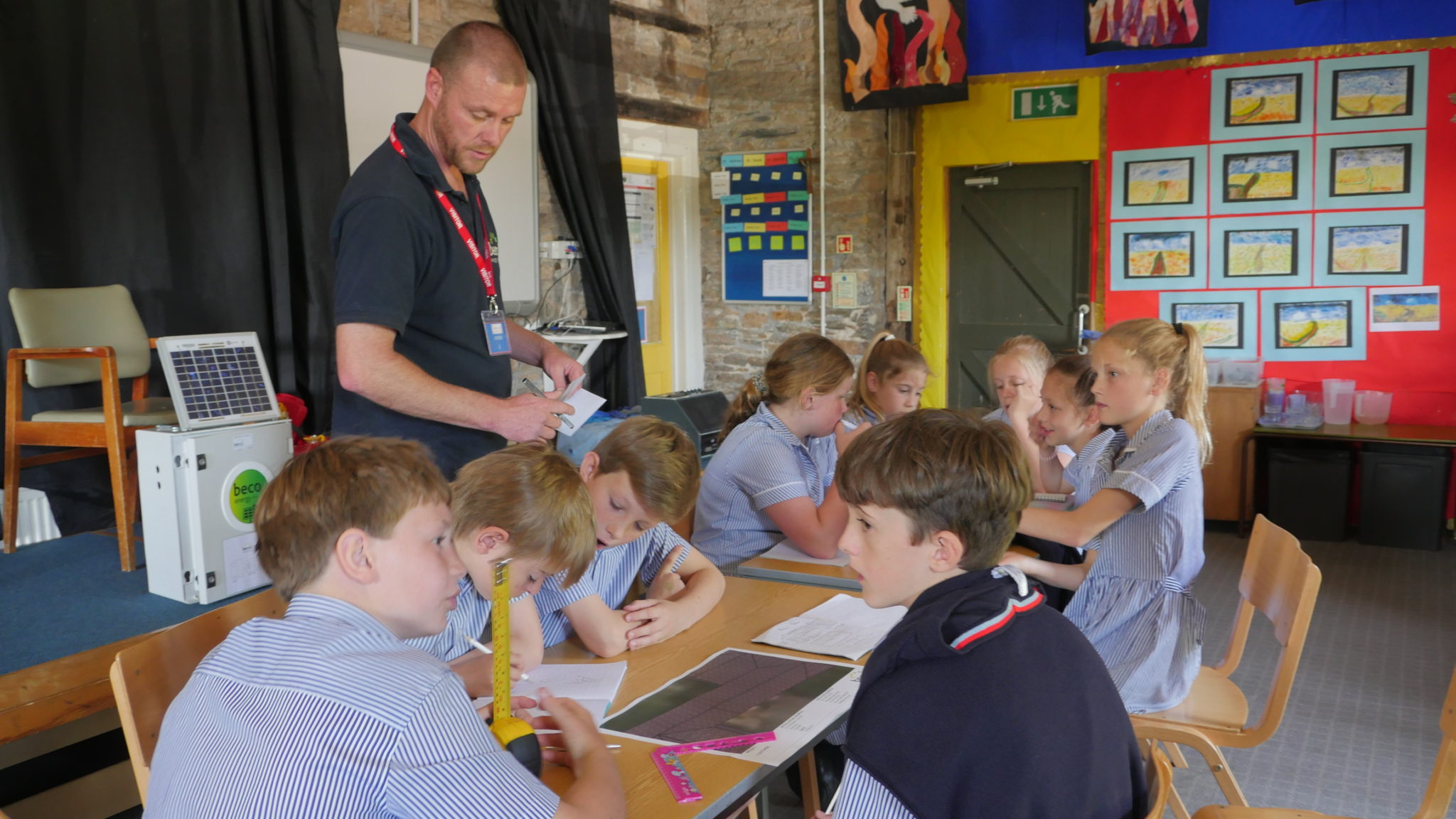
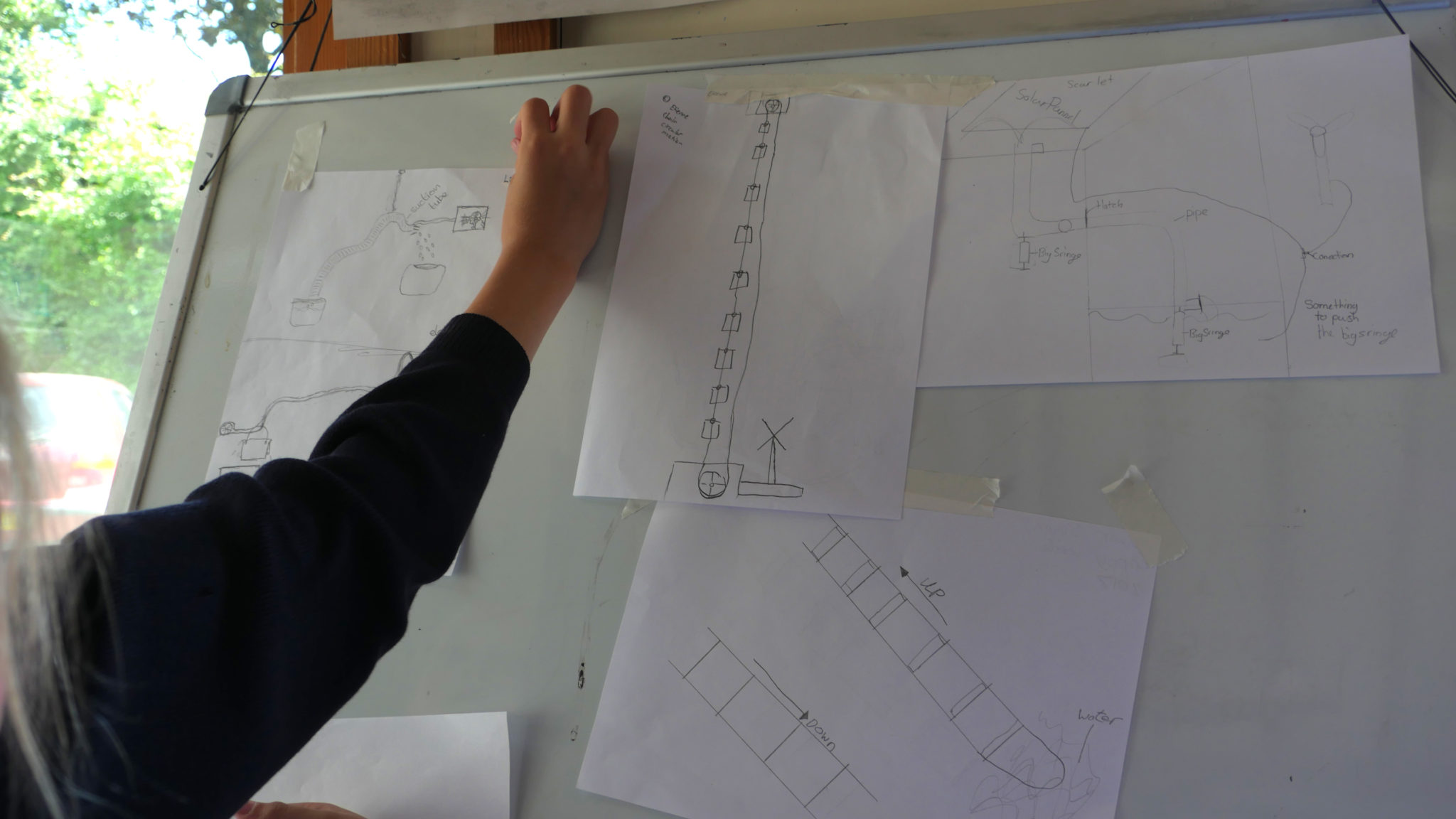
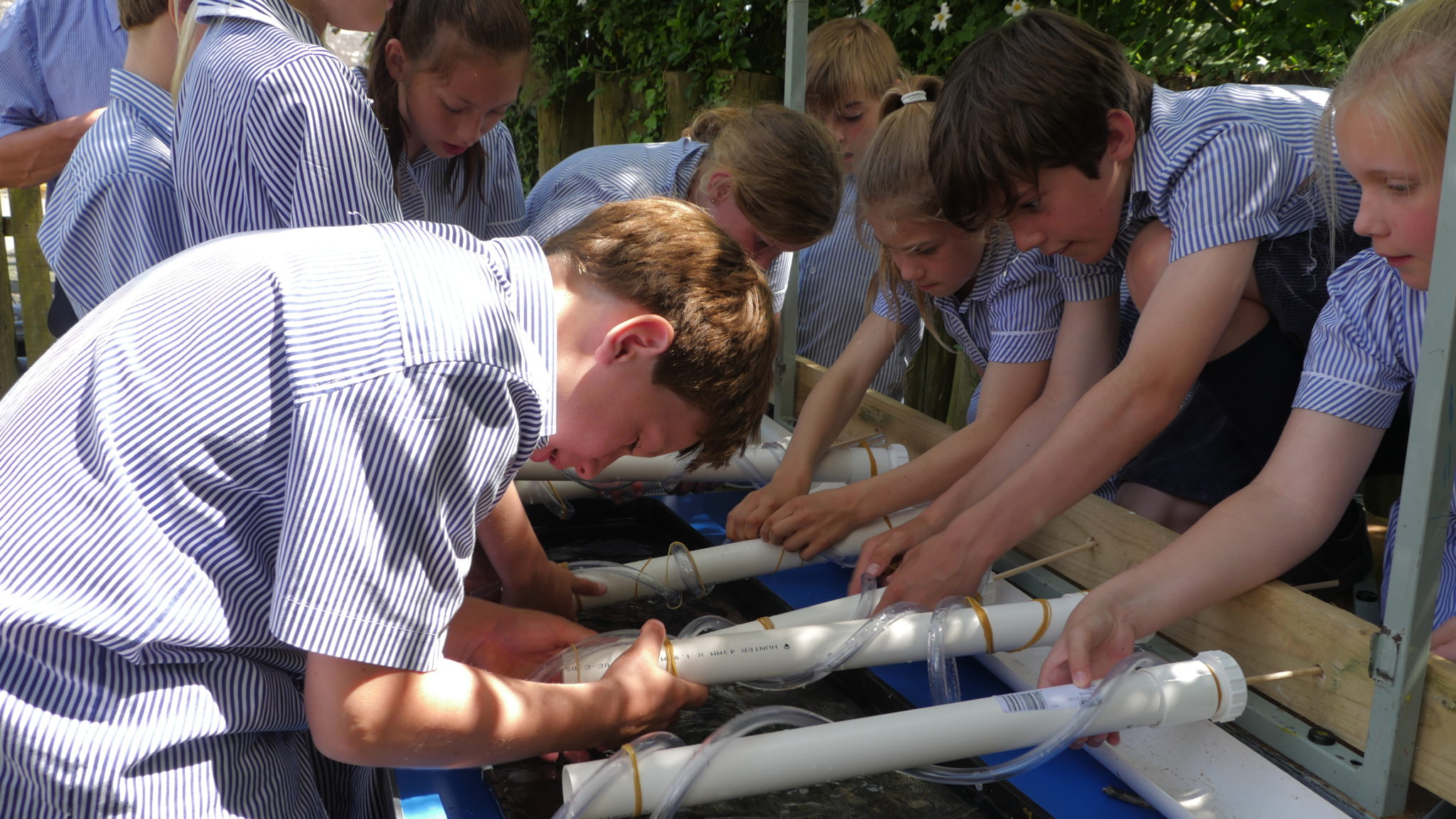
• The Renewable Energy Experiential Learning pilot with St Christopher’s school saw a class of students hearing how the turbines work, designing their own water-moving devices and making water wheels from sticks and leaves at the river’s edge – shoes and socks off, feet in the water! If you missed it, here’s the
link to the film – please share it.• The canoe launch platform was also much-used by kayakers and swimmers
• The automatic fish counter has tracked 100’s of fish and the fish pass has been welcomed by Westcountry Rivers Trust as truly “best practice.”
More good news:
• Staverton Hydro….. learn all about this new investment opportunity…..
Looking forward to seeing you on the 7th – rain or shine.
The Screw Fest is part of:
Open Eco-Homes Weekend
Fri 6, Sat 7 and Sun 8 Oct. Free
17 exciting homes and projects open to visit – full details in the programme or get your hard copy from Greenlife, The Mansion, Guildhall or Library, Totnes.
and don’t forget:
Eco & Community Homes Fair
Sat 21 Oct 10.00am to 3.00pm, Totnes Civic Hall. Free
by tresoc | Sep 21, 2017 | Latest TRESOC News
Totnes Renewable Energy Society (TRESOC) is a local sustainable community energy company. We have a portfolio of renewable energy projects stretching from Plymouth to Exeter, our most recent project being Totnes Weir. In 2015, TRESOC was awarded RegenSW’s ‘South West Green Energy Award for the Best Community Initiative’ for the Shine Project. Working with South Devon Rural Housing Association (SDRHA), Tresoc installed solar pv on 42 properties, which means cheaper fuel bills for residents.
We are currently developing 300 kW of new solar projects, a 100kW hydro electric power plant at Staverton Leat and a 70kW Anaerobic Digester at Old Parsonage Farm Dartington. This year we have received two RCEF grants for £19k & £18K to progress the Hydro and AD projects and are working in close partnership with the Dartington Estate.
Early this year Tresoc launched its Renewable Energy Experiential Learning (REEL) education programme for primary schools, which has also been nominated for a Regen award. Our aim is to gradually offer the REEL programme to all local primary schools, as and when we raise funds.
We are looking to grow our team and have an opportunity for a passionate and enthusiastic part time communications director. The role is flexible and can be generally done remotely, with the exception of monthly board meetings (these are usually held between 7-9 on a Tuesday night) and occasional team meetings. The role is currently approx. 10 hours per month for a salary of £200. However, we are an expanding company and the role will grow over time.
Job description – Facilitate the promotion of community share-offers. Working with a team of committed professional on a part time basis. We are able to offer a modest hourly rate.
Duties include – Members newsletters, PR and branding.
Promote the work of Tresoc through press and social media (manage website content, facebook, twitter). Maintain & improve communications with members and supporters and produce member’s and friends’ communications – monthly newsletter (MailChimp). Grow local and national database of PR contacts. Develop Tresoc brand, create guidelines ‘what we do & who we are’ & ‘how we talk about it’. Assist with marketing around share-offers. Organise and address AGM.
To apply please send a CV to admin@tresoc.co.uk. Closing Date 12th October.
by tresoc | Jun 24, 2017 | Latest TRESOC News
Fantastic News! Staverton Hydro Community Benefit Society (SHCBS) have been awarded a grant of £20,000 from the Rural Community Energy Fund (RCEF) to kick start the development of the 100kW hydro power plant at Staverton Leat.
SHCBS will use the grant to do a feasibility study and look at the potential of the hydro scheme on the River Dart. Potentially, the electricity generated by the scheme will be supplied to and used by the Dartington Hall Trust Estate.
This has historical significance, as the Estate’s (and Staverton village’s) first electricity supply was generated from a hydro plant in the same location. The original plant, developed by Leonard Elmhirst, was in operation from 1930 until the early 70’s. Jo Talling, Property Director for The Dartington Hall Trust, remarked that she was ‘excited about exploring the project, working with Tresoc and the wider community to make the estate more resilient and reduce our carbon emissions. The project also speaks to our history as well as to Dartington’s new strategy.’ Roger Papworth, RCEF Programme Manager commented that ‘The Rural Community Energy Fund were please to award a Grant to Staverton Hydro as this is a great example of a community group investigating renewable energy options that the fund aims to support. If successful the project will not only re-establish an historical hydro facility but benefits will be shared across the wider community. We look forward to hearing of a positive outcome once this work has been completed’.
SHCBS has been set up by Tresoc specifically to develop the Staverton Hydro project. It was necessary to establish SHCBS as a separate company because of the terms of the loan agreement that Tresoc has with Charity Bank. The scheme will be developed with Tresoc’s engineering partner Hydrosense, who previously developed the 300kW hydro power plant at Totnes Weir. The construction of the scheme will be financed in a similar way to Totnes Weir, by raising community money through a share offer.
The local community are invited to several public meetings to discuss the project, which are planned to take place in late June and July. Furthermore, Tresoc will be inviting local residents to take part in a ‘walk & talk’, which will allow them to visit the site, that is on private land, and to ask questions about the project informally. Some of the grant money will also be used to fund Tresoc’s Renewable Energy Experiential Learning (REEL) Project with St Christopher’s of Staverton … read on for more info …
RCEF Grant Bid for Anaerobic Digester at Parsonage Farm, Dartington
Tresoc are in the process of submitting another grant application to RCEF to assess the feasibility of a 70KW Anaerobic Digester at Parsonage Farm, on the Dartington Estate. The plant would process farm waste products, such as slurry, and food wastes from the restaurants on the Dartington Estate, converting methane (one of the most potent greenhouse gasses) to electricity, heat and carbon-dioxide. Potentially, the electricity will be sold to the farmer and the Dartington Hall Trust (DHT), and the heat will be used by DHT in the local campsite showers.
by tresoc | Feb 8, 2017 | Latest TRESOC News
Listed 30s building goes solar in local partnership.
William Lescaze offices have new 30kW solar PV array.
A new 30kW solar-PV array has been put on the roof of the Lescaze Offices in Dartington village to provide renewable electricity.
The Dartington Hall Trust invested £35,000 in Totnes Renewable Energy Society shares to provide the funds needed to invest in the array. TRESOC worked with local renewable energy company Beco Energy Ltd to deliver the project in Dartington village. The solar array, carefully hidden from view on the Lescaze Offices roof was completed in late November.
Due to the Grade II listed status of the modernist flat-roofed building, which was designed by Swiss American architect William Lescaze in the 1920s (with additions in 1936), listed building consent was needed as well as planning consent from South Hams District Council.
The consent required the array to be invisible from ground view so the array is set back from the roof edge on a Flamco Falx mounting system using ballast that maintains the roof integrity. The Qcell 280 Wp modules will deliver around 21,000 kWh of green electricity annually and reduce the building’s carbon dioxide emissions by 11.48 tonnes a year.
TRESOC will provide electricity to the Trust at a reduced rate.
Karen Williams, chief operating officer of The Dartington Hall Trust, says: ‘It’s great to be working with TRESOC on the Lescaze project, by providing equity investment through our SEEDbed programme we have been able to secure a renewable energy supply for one of our buildings as well as being able to provide targeted enterprise support for a valued community organisation through our SEEDbed incubator programme.
Ian Bright, managing director, TRESOC, says: ‘We’re delighted to be working in partnership with Dartington to produce low cost green electricity for key stakeholders, high value employment in local businesses and a sustainable financial return on local community investment.’
David Inscoe, managing director, Beco Energy Ltd, says: ‘We have delivered many projects with TRESOC, from social housing to commercial roof top projects, and are delighted to have delivered another success.
To fund the project, the Trust made an equity investment of £35,000 in TRESOC through its SEEDbed programme. This follows on from the Trust’s investment of 20K in 2014, and £200 as a corporate member when TRESOC was founded in 2010. TRESOC will maintain the array with the specialist monitoring services of Argand Solutions.
[Press release provide by The Dartington Hall Trust, 2017]









 Totnes High St/Market square.